Blog Detail

03 Sep
Premium Quality Rice in India: Quality Standards, Types & Buying Checklist
Rice is one of the foods consumed on a regular basis in Indian households. The best quality of rice must provide clean grains, good aroma, consistent cooking ability, and consistency. It becomes easy for individuals, catering houses, restaurants, and other people outside India to buy rice when they know these facts. It is a well-known fact that India is famous for rice cultivation and Punjab is renowned for Basmati rice. Indian Basmati rice is well known but its quality needs verification.
What Defines Premium Rice Quality?
The premium quality rice in India does not stop at long-grain rice. There are various factors that should be taken into account. First, the grains should be clean and uniform without any impurities. Smell is one of the factors especially for the basmati type. There are also factors related to the cooked rice such as texture, elongation, and separation.
There are various factors taken into consideration by the FSSAI, which include grain length, length to breadth ratio, cooked grain length, expansion, moisture content, percentage of broken grains, damaged grains, and much more. The minimum length of milled basmati rice is 6.61 mm, while cooked rice is 12 mm.
Key Takeaways-
• Examine whether the rice is clean, smells well, feels good, and cooks properly.
• Make sure that the rice is appropriate for your recipe.
• Consider the process used, packaging, and quality specifications.
• Do a sample test before making an order in bulk.
Understanding Major Rice Types
One useful step in choosing premium quality rice in India is understanding the difference between rice types. Basmati is available as milled rice, brown rice, and parboiled forms. Milled Basmati has the bran and germ partly or fully removed. Brown Basmati retains more outer layers. Parboiled rice production involves soaking and heating processes prior to drying and milling. The types of Basmati rice are 1121, 1509, 1401, 1718,Choice depends on the dish and buyer.
Steam, Raw, Sella, and Golden Sella
Processing is another important comparison. Raw rice is milled without parboiling. The rice variety known as steam rice is subjected to steaming, which could affect its texture. The sella rice is parboiled and then processed to come up with a firm rice while the Golden Sella has a distinct gold color.
There is no single processing method that is best for every buyer. Biryani kitchens may prefer elongated, separate grains, while export buyers often work to specifications for size, moisture, broken percentage, packing, and processing.
How to Check Rice Before Buying
A checklist can prevent common mistakes.
Grains- The first thing is to check the grains. They must be uniform and there must not be too many broken grains.
Smell - Secondly, check the smell of the grains. The grains must have their natural smell; they must not have any artificial smell. According to the FSSAI standard for basmati rice, the product must have a natural smell and no artificial color, polish or artificial fragrance.
Packaging - Thirdly, check packaging details on the pack such as the type, variety, quantity, and lot number.
Commercial Consumers - For commercial consumers, sample check is done and specifications are checked.
Why Punjab Matters for Basmati
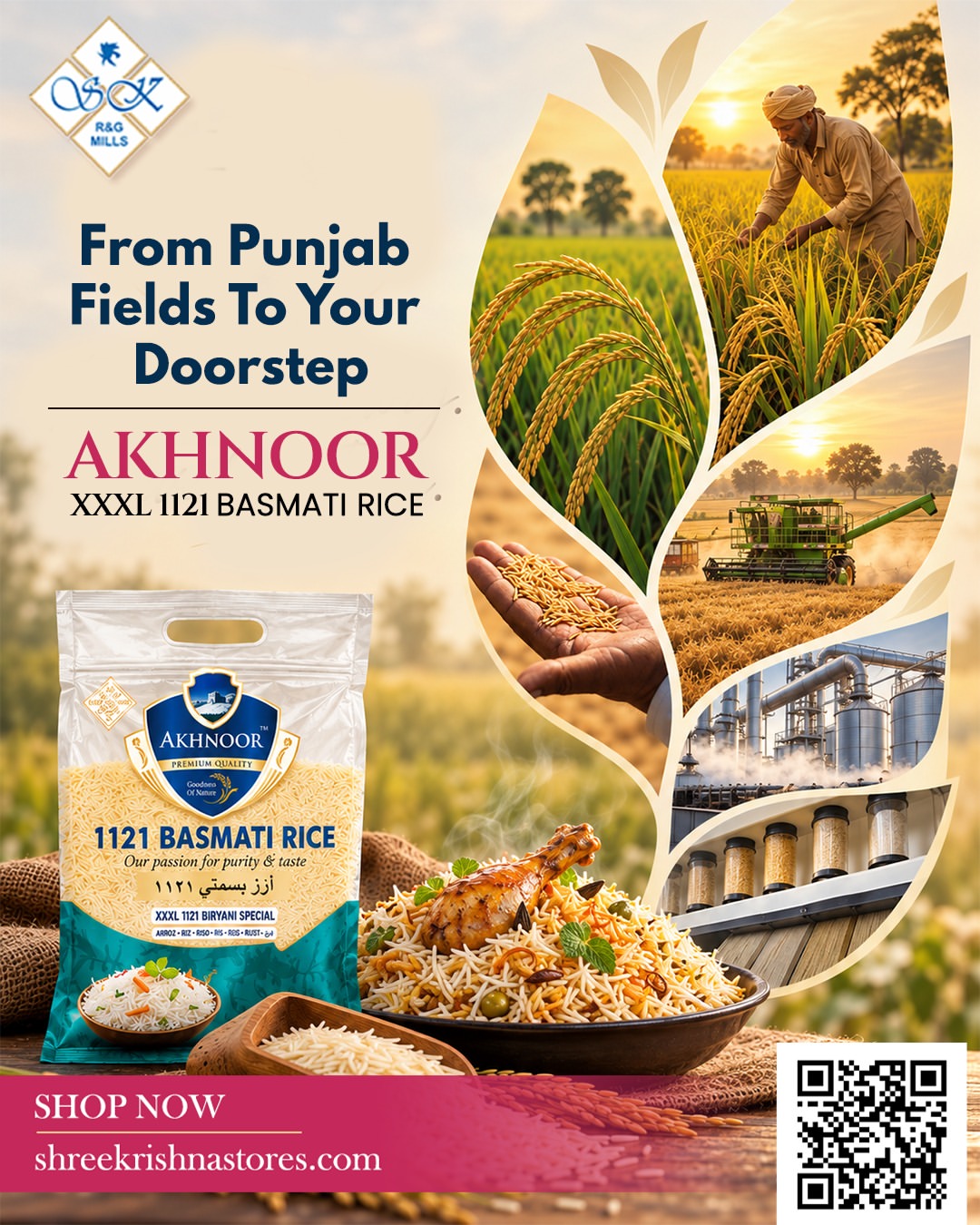
Basmati in India has its special place due to well-developed agricultural and processing system in Punjab. Sourcing rice from the mill located in Punjab gives the buyer the opportunity to have experience in procurement and processing of rice in India. However, just location will not ensure the good quality. This depends on the way of sourcing paddy, cleaning, processing, grading, sorting, packing and inspection of rice.
Selecting a Reliable Rice Mill for Premium Quality Rice in India
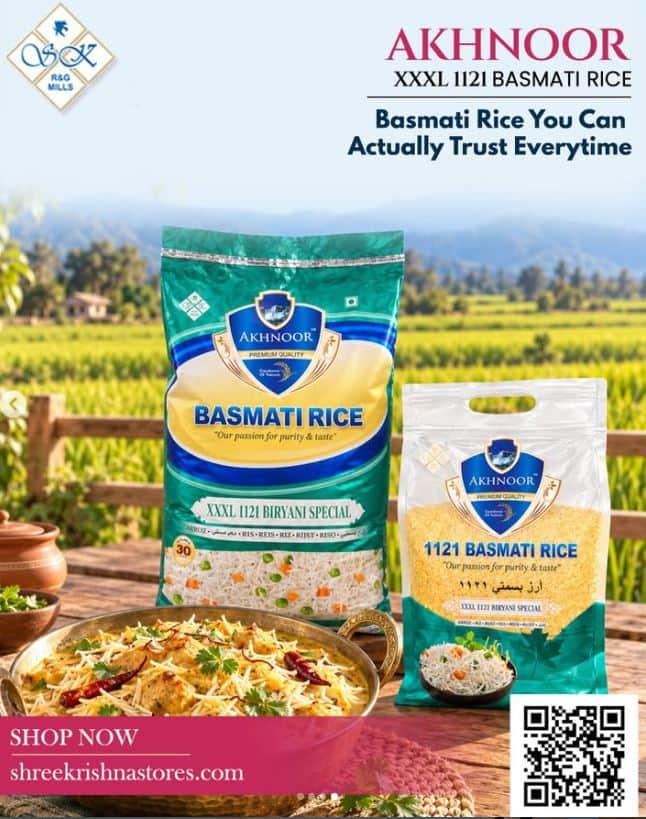
Shree Krishna Rice and General Mills is a family-run business that makes and sells rice from Punjab. The varieties include 1121, 1509, 1401, 1718, 1885 and PUSA in various processed forms.
Its website can help buyers move from information to products, processing, about the company, and contact information. In doing so, customers will be able to make an informed choice about their rice before purchasing it. For a dependable rice mill, there should be clarity of product information, specifications, communication, packing, and bulk needs.
FAQs
1.How does premium rice differ from ordinary rice?
It mostly consists of the combination of good grain appearance, cleanliness, natural aroma, consistent cooking behavior, and quality attributes.
2. Which variety of Basmati is suitable to prepare biryani?
Normally long grain varieties of Basmati having a high elongation ratio and individual cooked grains are selected. The final selection depends upon the recipe, preparation method, and the texture required.
3. What is the way to identify high-quality rice in India?
The factors such as grain quality, aroma, purity, packing information, and cooking properties should be taken into consideration. In case of bulk purchases, sampling can be done.
4. Is Sella rice better than Steam rice?
Neither is universally better. Since Sella and Steam have different processes and cooking properties, the right choice would depend on what you are cooking and your buyer’s choice.
5.Why is Punjab a significant state for Basmati Rice?
Punjab is an important agricultural as well as processing environment for rice, which makes it an important sourcing region for Indian Basmati Rice.
Conclusion
Identifying premium quality rice in India can be easy once one knows what they are supposed to look out for. The appearance of the grain is just the beginning. The variety, smell, processing, cleanliness, performance while cooking, the quality measures, packaging, and supply are all factors in making a final decision. A household or business would simply have to follow the right checklist that includes identifying the use of the product, analyzing its specifications, looking at sample tests, and finally choosing the right supplier.
Recent Post
Partner With Us
Please fill out the form below and we will get back to you as soon as possible to discuss partnership opportunities.