Blog Detail
23 Nov
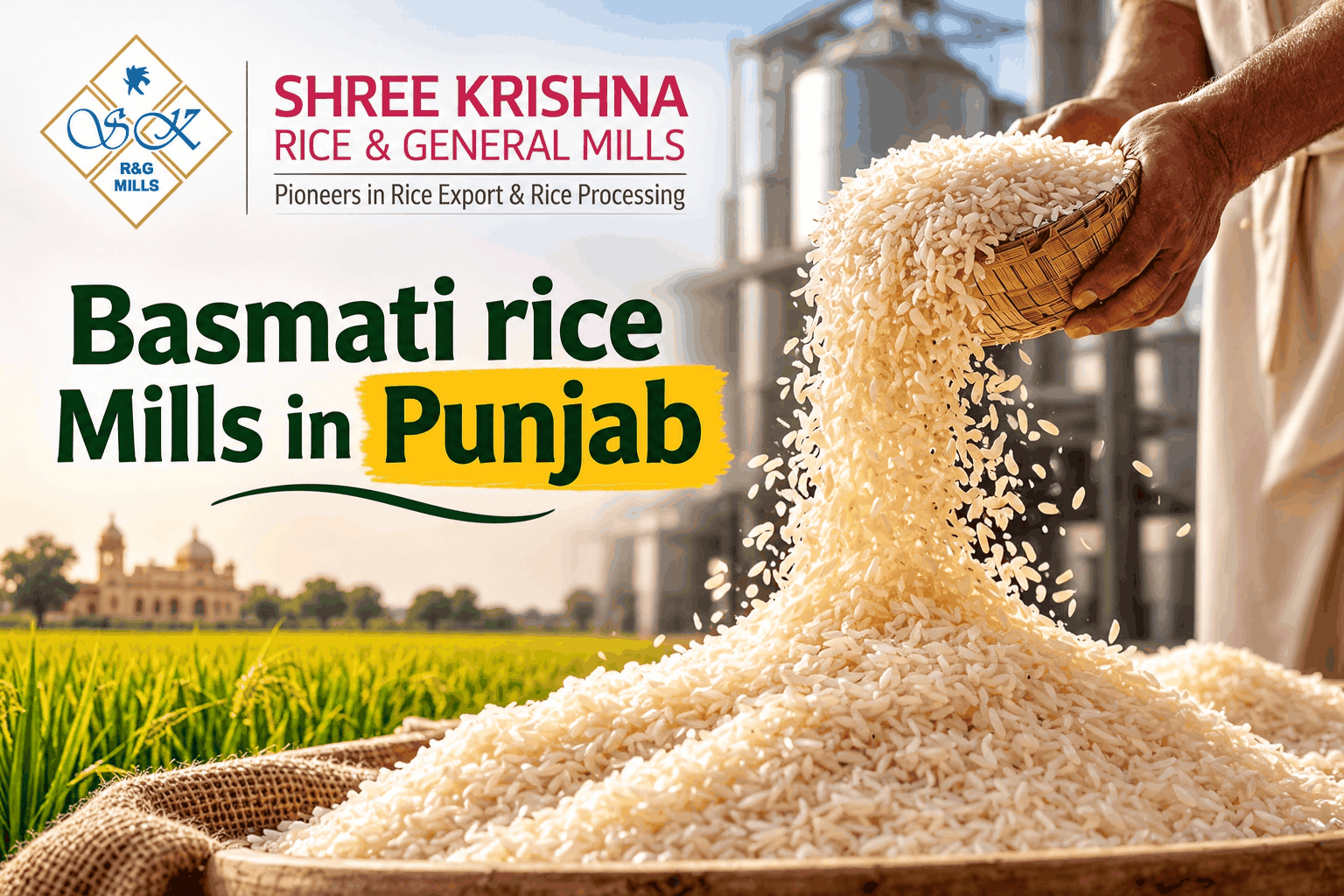
Basmati Rice Mills in Punjab: How Premium Rice Is Made
Punjab is known for basmati-growing regions, but quality depends on more than the crop. Paddy selection, controlled processing, testing, and packing all shape the finished rice.
When choosing the best Basmati rice mill in Punjab, consider:
- Correct handling of batches
- Suitable equipment
- Consistent quality checks.
Correct rice choice
- Rice is tested for moisture content, length, scent, type, impurities and uniformity. If lots do not meet criteria, they should be separated.
- Depending on the variety (1121, 1401, 1509, 1718, 1885 and Pusa), rice will have different characteristics and uses. Ensure you know the correct rice type and form. Having a traceable source of rice helps the Basmati rice mills in Punjab.
Cleaning and removal of impurities
After acceptance, the rice undergoes cleaning. The rice has screening, sorting and de-stoning processes performed on it to remove any impurities (chaff, dust, stones, un-wanted materials). This prevents damage to machinery and increases hygiene.
Correct processing
Different types of Basmati rice exist. These include raw, steam, creamy sella, and golden sella. Processing affects the strength, appearance, texture and cooking properties of the rice.
Raw rice has not been parboiled. Steam rice is steamed, sella rice is soaked then heated before being dried and milled. Ask the mill what type of processing it has done and ask to test a sample.
Controlled soaking, steaming and drying
Parboiled rice is soaked, steamed and dried. Temperature, time taken, water quality and moisture must be controlled to avoid cracking and uneven colour.
Husking, milling and Polishing
Husking removes the husk, and milling removes the bran to achieve the desired rice. Polishing should be controlled to avoid excessive damage.
To ensure accuracy at each stage, Shree Krishna Rice & General Mills invests in high quality equipment. There are several Bühler production lines in place to ensure minimal length loss and damage. This can be a key point when comparing Basmati rice mills in Punjab.
Grading and quality checking
Rice is graded. Broken or damaged grain, and discolouration are checked. Any visible defects are found using optical sorting. Metal impurities can be identified using metal detectors. Manual checks are still important.
Quality checks may include moisture content, grain size, broken grains, impurity levels, scent and cooking properties. The FSSAI have guidelines for basmati rice. These include ensuring it is the correct type of basmati, has a natural scent, has correct characteristics, moisture level, damage and not containing any non-basmati rice. Ask for product specifications and relevant reports.
Choosing a rice mill
Consider the following factors when choosing a Basmati rice mill in Punjab:
- Rice varieties and forms available
- Can the supplier provide a sample and specification?
- What checks are in place for the incoming rice, and final product?
- Are processing, packaging and storage carried out in a hygienic manner?
- Can they provide for the desired volume, packaging and delivery dates?
- Do they have appropriate certification and documentation for export to the desired market?
- To compare Basmati rice mills in Punjab, cook samples in the same way. Consider scent, fluffiness, separation, texture and uniformity. Do not just consider price or length.
Shree Krishna Rice & General Mills
This family run manufacturing and exporting business was set up in 1999 in Kotkapura, Punjab. Different varieties of basmati and non-basmati rice are processed in this facility, including 1121, 1401, 1509, 1718, 1885 and Pusa, using modern milling, sorting and quality checks.
Shree Krishna Rice & General Mills offer high quality Basmati rice. They can tailor rice to your specifications, mill & grade the rice and ensure it is packaged in a clean manner. It is possible to order rice from this supplier for domestic use or export.
It should be considered whether different varieties/grades of rice can be separated in storage and packaging. Good labelling will reduce errors and also makes reordering the same product much easier in the future.
Please supply a specification.This should include rice type, rice form, grain length, broken grain %, moisture range, packaging type and quantity. A clear specification allows both parties to have a clear idea of quality.
Ensure good communication with your chosen mill. Realistic lead times, regular updates in the case of changes to crops/ delivery dates, and a contact for documentation/ quality issues will indicate a competent Basmati rice mill in Punjab.
Summary
- Correct rice type is chosen to ensure quality.
- Clean processing and drying, and control helps to ensure quality.
- Husking, polishing, sorting and grading all effect the final product.
- Check specifications and cooking properties.
- Good packaging, storage and traceability ensures quality up to delivery.
- Compare samples, documentation, capacity and service.
F.A.Q.
1. How does Operation of Basmati Rice Mill processed?
Grain is processed to produce the desired grain. The rice is graded, tested and then packaged for sale and export.
2.Specify the types of Basmati Rice?
There are a variety of Basmati rice available in Punjab. 1121, 1401, 1509, 1718, 1885 and Pusa are common varieties. Due to differences between mills, seasons and specification requirements, different varieties can be available.
3. What is the difference between steam and sella rice?
Steam rice has been steamed. Sella rice has been parboiled (using soaking and heat), and then dried and milled. The rice can have different appearances and cooking properties.
4. How can I check the quality of basmati rice?
Consider the type, and specification of rice. Check a sample, and that it has a good scent and uniform grain. Cook it, and check for fluffiness, separation and texture. Ask for relevant reports.
5. Why is quality control important when processing rice?
Quality checks at each stage mean impurities, high moisture, damaged grain and inconsistency can be picked up early. This means food safety is maintained, consistent cooking and reordering.
Recent Post


Partner With Us
Please fill out the form below and we will get back to you as soon as possible to discuss partnership opportunities.